T-Shirt Fit Guide
 admin
7 min read
Fit labels are the least standardised thing in clothing. One brand’s “relaxed” is another’s “regular”, and a third brand’s “oversized” is barely wider than a standard tee with a longer hem.
That inconsistency is why size charts exist but rarely help. What does help is understanding what a cut changes structurally — because once you know that, you can read any product page and work out what you are actually buying.
The three measurements that define a fit
Every t-shirt cut comes down to three numbers. Size is a summary of them; the numbers themselves are the real information.
Chest width. Measured flat, armpit to armpit, then doubled. This is the number that decides whether a tee is fitted or loose. A 2–3 inch difference here completely changes how a shirt reads.
Shoulder seam position. Whether the seam sits on the edge of your shoulder or drops down onto your upper arm. This single detail is what separates a regular tee from an oversized one more than width does.
Body length. Hem position relative to your hip. Controls whether the tee reads as cropped, standard, or longline, and has a direct effect on how long your legs look.
Almost every product page worth trusting lists all three. If a page only gives you S/M/L/XL, you are guessing.
Regular fit
The baseline. Shoulder seam sits at the edge of your shoulder, the body follows your torso with a couple of inches of room, and the hem lands around mid-hip.
Suits: most body types, most occasions. Works tucked or untucked, layers cleanly under a jacket.
Watch for: on a broader chest, a regular fit can pull across the front while still being loose at the waist. If that is you, look at relaxed rather than sizing up — sizing up gives you longer sleeves you did not want.
Relaxed fit
Regular fit with roughly two extra inches through the chest and waist. The shoulder seam usually stays in the same place or drops very slightly.
The point of a relaxed cut is comfort without changing your silhouette. It skims rather than clings, which makes it the most forgiving everyday option.
Suits: anyone who finds regular fits restrictive through the midsection, and anyone in hot weather — the extra room lets air move.
Watch for: relaxed is the label brands abuse most. Check the chest measurement against a regular fit from the same brand. If the difference is under an inch, it is a regular tee with a different tag.
Boxy fit
Wide through the body but short in length, so the tee is close to square. Shoulder seam typically sits at or just past the shoulder edge.
Boxy is a deliberate style choice rather than a comfort one. The shortened hem is what makes it work — it stops the width from reading as shapeless and keeps leg length visible.
Suits: taller frames, and anyone wearing high-waisted bottoms. The short hem and high waistband meet cleanly.
Watch for: boxy over low-rise bottoms exposes a strip of midriff you may not have planned for. Check the length measurement, not just the width.
Oversized fit
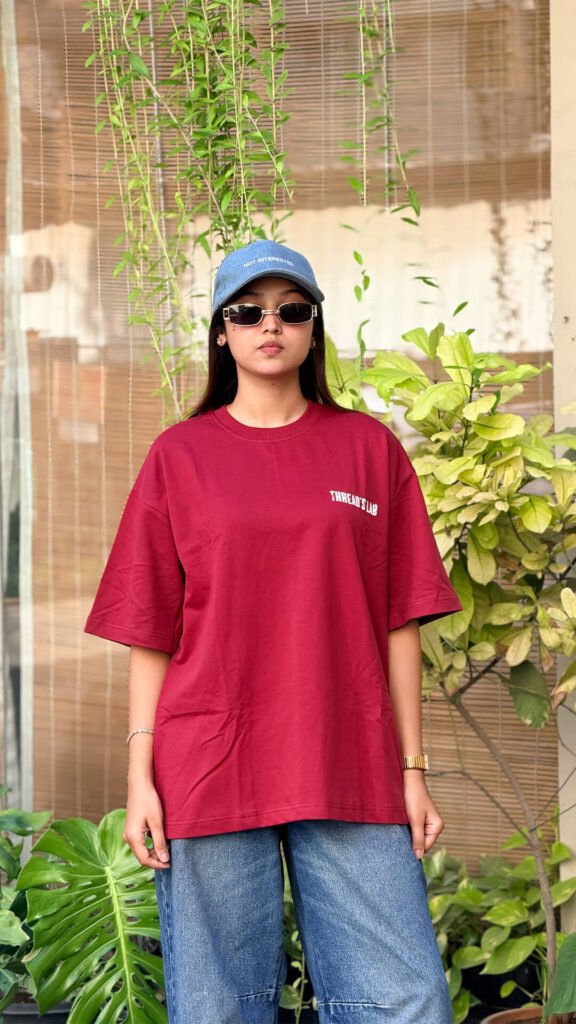
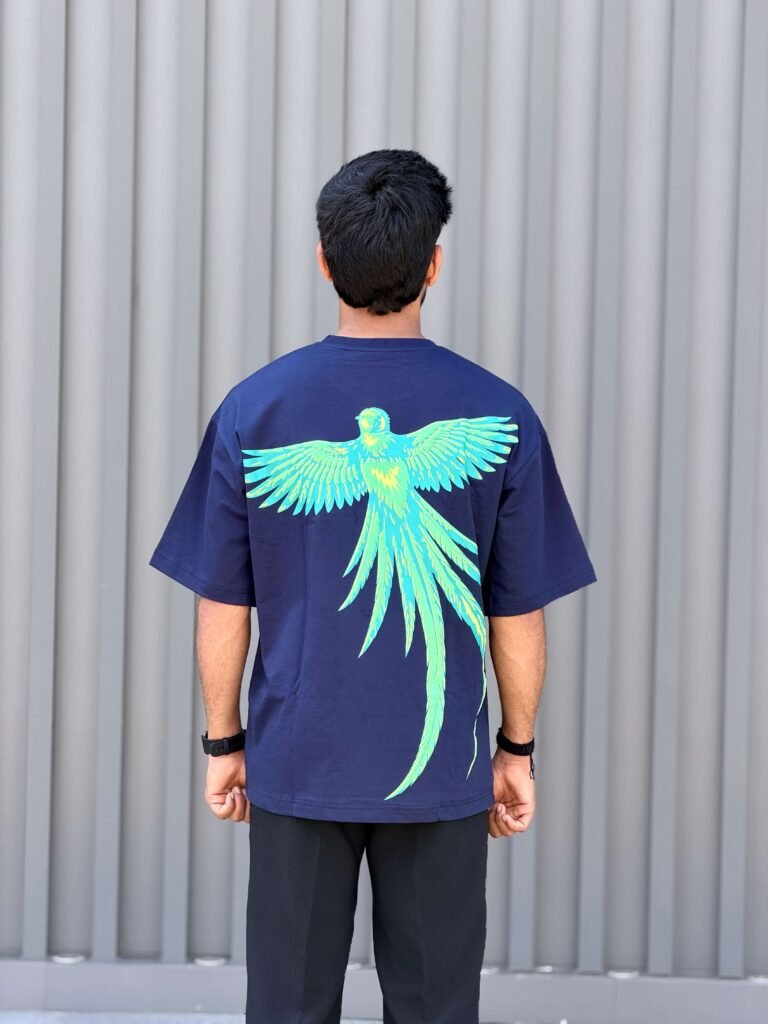
Wide through the body, dropped shoulder seam sitting on the upper arm, longer sleeve, longer body.
The dropped shoulder is the defining feature. It is what creates the loose column down the arm and the slightly slouched line across the top of the chest. Without it, you have a large regular tee.
Suits: streetwear styling, layering, and anyone who wants volume as part of the look rather than as a side effect.
Watch for: oversized shortens your apparent height unless you balance it. Narrow bottoms, a half-tuck, or a monochrome outfit all fix this. See our guide on styling oversized t-shirts for the specifics.
Slim and muscle fit
Worth covering because people often buy them by accident.
Slim fit narrows through the waist and shortens the sleeve. Muscle fit narrows further and adds room specifically at the chest and bicep. Both are cut to show body shape, which means both are unforgiving about anything you would rather they did not show.
Suits: lean and athletic builds, and layering under a structured jacket where bulk matters.
Watch for: slim fits are the most likely to become unwearable after a few washes, because there is no ease left to lose.
Matching a cut to your build
Some honest generalisations, with the caveat that personal preference beats all of them.
Slim or narrow frame. Regular and boxy both work well. Oversized can swallow you — if you want it, choose a cut with a shorter body length so the proportion stays readable.
Broad shoulders, narrower waist. Regular or relaxed. Oversized hides the shoulder line that is actually your best feature.
Fuller through the midsection. Relaxed is the most flattering, because it skims without clinging. Avoid slim, and be careful with boxy — the short hem can draw attention to exactly where you do not want it.
Tall. Longline and oversized are both easy wins. Regular fits often run short in the body on taller frames, so check length before chest.
Shorter. Boxy and regular. If you want oversized, pair it with high-waisted bottoms and keep the hem above mid-fly.
The trick that beats every size chart
Take a t-shirt you already own and like the fit of. Lay it flat, measure chest width armpit to armpit, and measure length from the highest point of the shoulder to the hem. Write both numbers down.
Now compare those two numbers against any product page. You will be right far more often than by picking your usual letter size, because you are comparing garment to garment rather than garment to an idealised body.
Our Fit and Cut collection lists both measurements for every size, which is exactly what this method needs.
What washing does to fit
Cotton shrinks in length before width. A tee that fits perfectly out of the bag can be an inch shorter after three hot washes, which quietly turns a regular fit into a boxy one.
Pre-shrunk fabric reduces this but does not eliminate it. Cold water and air drying eliminate almost all of it. If a tee is right at the edge of the length you want, assume you will lose a little and plan accordingly.
Frequently asked questions
What is the difference between relaxed and oversized? Relaxed adds width through the body but keeps the shoulder seam at the shoulder edge. Oversized adds width and drops the shoulder seam onto the upper arm. Relaxed changes how roomy a tee feels; oversized changes the silhouette.
Is boxy the same as cropped? No. Cropped describes length alone and can be any width. Boxy describes a specific ratio — wide through the body with a shortened hem — so the tee is roughly as wide as it is long.
Which t-shirt fit is best for Indian summers? Relaxed. The extra room through the chest and waist lets air move without the fabric weight and coverage that a heavyweight oversized cut brings.
Should I size down if I am between sizes? Only in relaxed and oversized cuts, where there is enough ease to spare. In regular and slim fits, size up — a slim tee with no ease left becomes unwearable after a few washes.
How much shrinkage should I expect? On pre-shrunk cotton, roughly half an inch to an inch in length over the first few washes, and very little in width. Cold water and air drying reduce this to almost nothing.
Where to start
If you are unsure, buy a relaxed fit first. It is the most forgiving cut across the widest range of bodies and the easiest to style in either direction — tuck it and it reads smart, leave it out and it reads casual.
From there you will know whether you want more room or less, and you will have a reference garment to measure against.
Browse all cuts in the full collection.