How to Style Oversized T-Shirts
 admin
7 min read
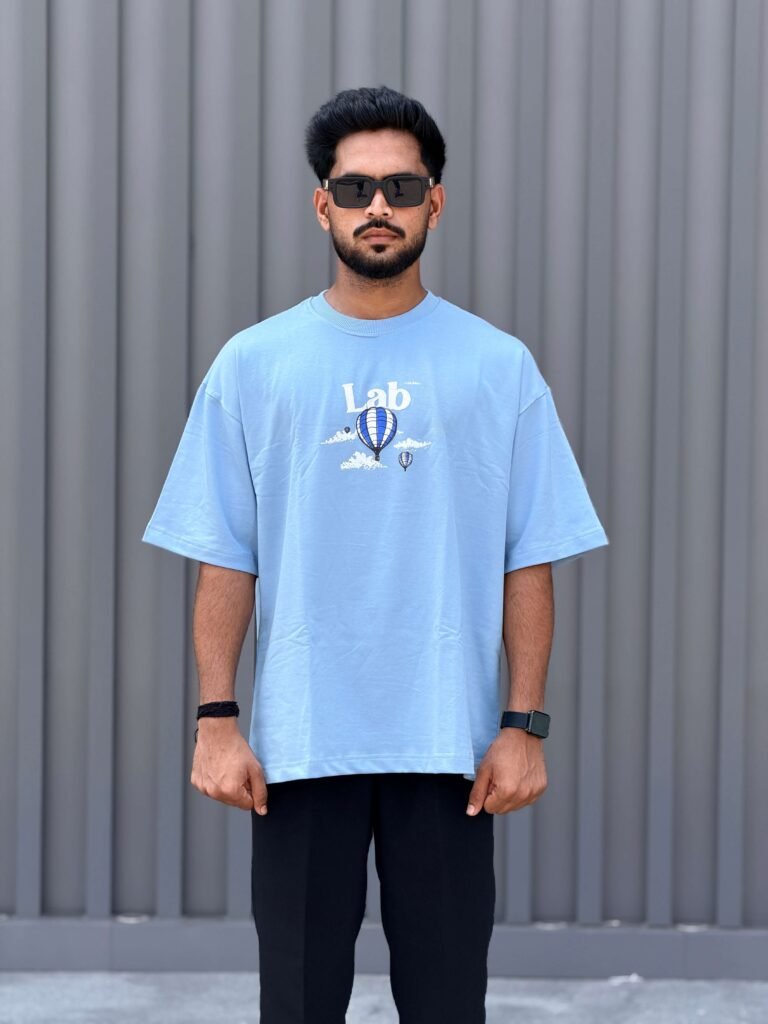
There is a version of the oversized t-shirt that looks intentional, and a version that looks like you grabbed something two sizes too big on the way out. The fabric is often identical. What separates them is proportion — how the tee relates to everything else you have on.
Most styling advice skips straight to outfit photos. This one starts with the rule underneath them, because once you understand it, you can build your own combinations instead of copying someone else’s.
The rule that makes oversized work
Oversized clothing only reads as deliberate when something else on your body is fitted. If the top is loose, the bottom should be narrow, or cropped, or cuffed. If you want loose trousers too, then the top needs a defined shoulder or a visible waist break.
Volume on volume with no anchor point is the single most common mistake. It removes every line your eye uses to read height, and the result is a silhouette that looks shorter and heavier than the person wearing it.
Everything below is a variation on that one idea.
1. Oversized tee with slim or straight jeans
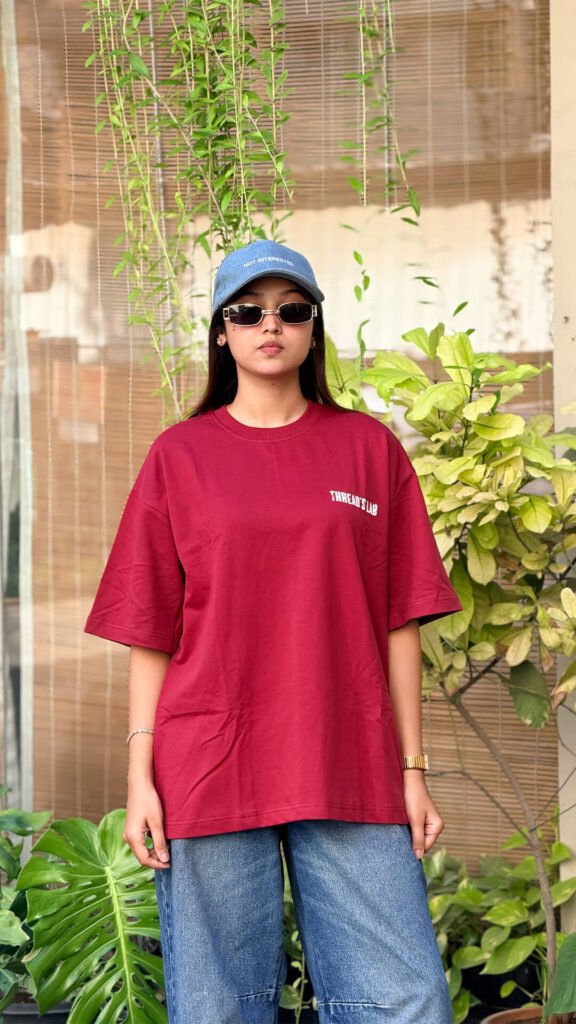
The safest starting point and still the best. A relaxed tee over a straight-leg or slim jean gives you a clear top-heavy, bottom-narrow shape. Keep the jean at full length or with a single small cuff.
If you are under 5’8″, go straight-leg rather than slim — a very tight leg under a wide top can exaggerate the contrast too much.
2. Half-tuck into high-waisted trousers
Tucking just the front section of the hem creates a waistline where the t-shirt would otherwise hide one. It costs nothing, takes two seconds, and instantly adds visible leg length.
This works best with trousers that sit at or above the natural waist. On low-rise bottoms the tuck has nothing to sit against and just looks untidy.
3. Tee over shorts, hem just covering
For summer, the proportion to aim for is a t-shirt hem that lands a little above the shorts hem — enough to show the shorts, not so much that the tee looks cropped. When the tee fully covers the shorts you get the “did he forget trousers” effect, which is a different look entirely and harder to pull off.
4. Layered under an open shirt
An open overshirt or camp collar shirt adds two vertical lines running down your torso. Those lines do most of the slimming work, which means you can get away with a genuinely loose tee underneath.
Keep the shirt long enough that its hem sits below the t-shirt hem. Reversed, it looks accidental.
5. Tee, straight trousers, chunky sneaker
Streetwear’s default formula, and it works because the shoe provides weight at the bottom to balance the volume at the top. A slim runner under an oversized tee and wide trouser leaves the outfit unbalanced — everything is heavy up top with nothing holding it down.
6. Monochrome top to bottom
Matching the t-shirt and the bottom in the same colour family removes the horizontal line where they meet. Without that break, your eye reads one continuous column instead of two blocks, which is the most reliable way to keep an oversized fit from cutting your height in half.
Black on black is the obvious version. Stone, olive and washed navy do it just as well and look less severe in daylight.
7. Tucked fully, with a belt
The most formal thing you can do with an oversized tee. Full tuck, visible belt, pleated or wide-leg trouser. The excess fabric gathers at the waist and creates a blouson effect that reads as considered rather than sloppy.
Choose a tee in a softer fabric for this. A stiff, heavy cotton bunches instead of draping.
8. Over a longer-length base layer
A fitted long-sleeve or a longline tee under an oversized short-sleeve gives you layers without bulk, and the contrast between the fitted sleeve and the loose body is exactly the anchor the rule asks for. Good for the cooler months without committing to a jacket.
9. With a graphic — placement matters
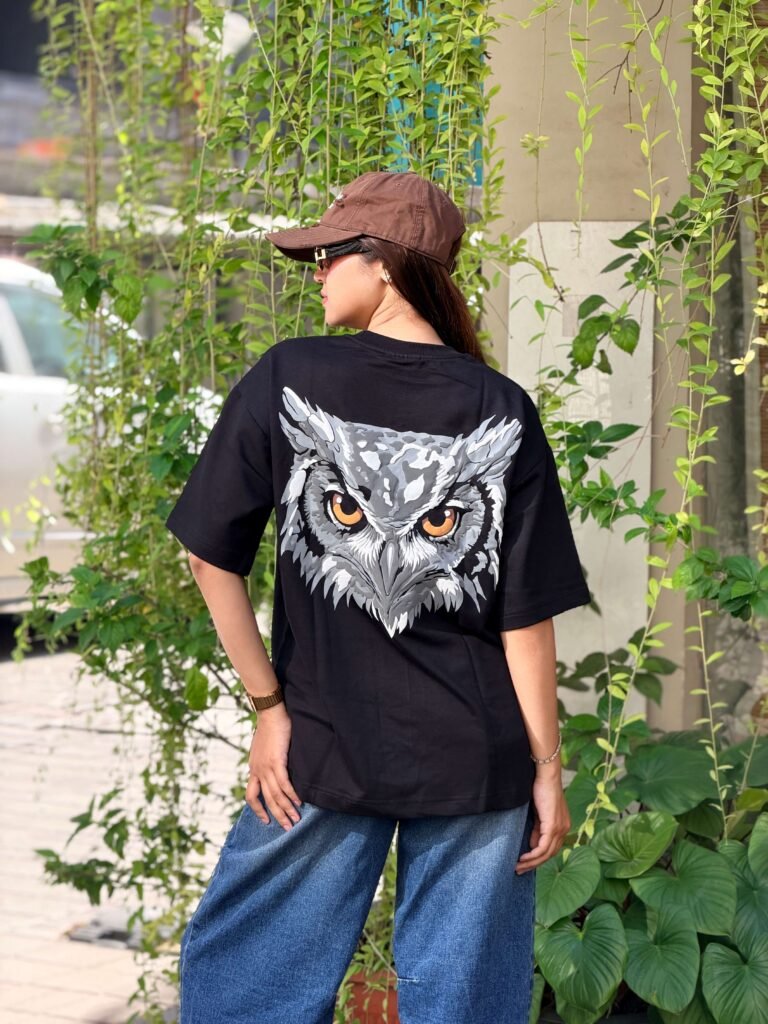
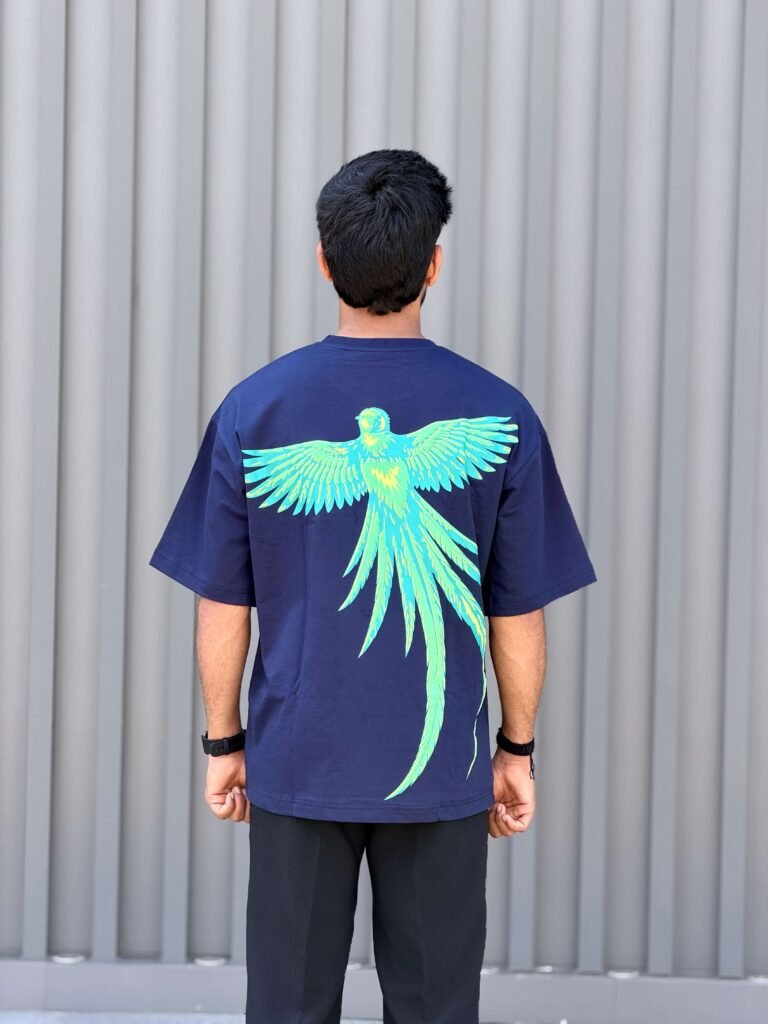
If the tee carries a large chest or back print, treat the print as the focal point and keep everything else quiet. Plain bottoms, minimal accessories. Two competing graphics in one outfit fight each other and neither wins.
On our graphic tees, most prints are sized to sit on the upper chest or across the back, which is deliberate — a print that sits too low on an oversized body drags the eye down.
Getting the size right in the first place
Oversized is a cut, not a size up. A brand’s oversized fit already has the extra width and the dropped shoulder built into the pattern. Buying your normal tee in XL instead gives you a longer body and longer sleeves but the same shoulder seam position, which just looks like a badly fitting regular tee.
Two things to check before you buy:
Shoulder seam. On a true oversized cut it should sit somewhere on your upper arm, not on the edge of your shoulder. That dropped seam is what creates the relaxed line down the arm.
Body length. The hem should land around mid-fly or slightly below. Longer than that and you lose the leg length that everything above is trying to protect.
Our Fit and Cut range lists both measurements on each product page so you can compare against a tee you already own rather than guessing from a size chart.
Fabric changes the drape more than you’d expect
Two tees with identical measurements can hang completely differently. A lightweight 150 GSM single jersey clings and shows every line underneath. A 220–240 GSM combed cotton holds its shape away from the body, which is what gives oversized tees that structured, slightly boxy fall.
For oversized specifically, heavier is usually better. It is also the difference between a tee that still fits after twenty washes and one that stretches out at the neck by the third.
Common mistakes worth avoiding
Sleeves too long. If the sleeve hits your elbow, the proportion is off. Mid-bicep to just above the elbow is the range.
Neckline too wide. A neck opening that slides off your shoulder makes the whole tee look borrowed. Ribbed collars hold their shape; flat ones stretch.
Everything loose. Worth repeating, because it is the mistake almost everyone makes first.
Ignoring the wash. Oversized cotton shrinks in length before it shrinks in width. Cold wash, air dry, and the fit you bought is the fit you keep.
Frequently asked questions
Can shorter guys wear oversized t-shirts? Yes, with two adjustments. Choose a cut with a shorter body length so the hem stays above mid-fly, and pair it with high-waisted or full-length narrow bottoms. The half-tuck is particularly useful here because it manufactures a waistline that the tee would otherwise hide.
Should I size up to get an oversized look? No. Sizing up a regular tee gives you longer sleeves and a longer body but leaves the shoulder seam in the same place, which is the detail that actually creates the oversized line. Buy a cut that is designed oversized in your normal size.
Do oversized t-shirts work in formal or office settings? In smart-casual offices, yes — fully tucked with a belt and a pleated trouser, in a plain colour with no graphic. Untucked with a print, no.
What colours are easiest to start with? Black, off-white, stone and washed navy. All four work in monochrome outfits, all four pair with denim, and none of them fight with a graphic if you add one later.
Start with one formula
You do not need nine outfits. Pick the one closest to what you already wear — probably the slim jean or the half-tuck — and get it right before adding anything else. The rest are variations once you can see how the proportions behave on your own body.
Browse the full t-shirt collection to find a cut that fits the formula you picked.