T-Shirt GSM Guide
 admin
7 min read
Every brand calls its t-shirts premium. Very few explain what they mean by it, which leaves you comparing two tees at different prices with no way to tell whether the gap is quality or margin.
There are four things that genuinely decide how a t-shirt performs: fabric weight, yarn type, knit structure, and finishing. All four are usually listed somewhere on a product page. Here is how to read them.
1. GSM — fabric weight
GSM stands for grams per square metre. It is the weight of one square metre of the fabric, and it is the single most useful number on a t-shirt spec.
Higher GSM means more cotton per unit of area, which generally means more opacity, more structure and more durability. It also means more heat, which matters a great deal in India.
The ranges
120–150 GSM — lightweight. Thin and airy. Often semi-transparent, especially in white and pastels. Drapes close to the body. Fine for layering or very hot weather; poor as a standalone tee if you care about opacity.
160–180 GSM — light to mid. The weight most mass-market and promotional t-shirts sit at. Comfortable in heat, acceptable durability, but prone to losing shape at the neck and hem over time.
180–210 GSM — mid weight. The everyday sweet spot for most of India. Opaque, holds its shape, still breathable enough for daily wear through most of the year.
220–250 GSM — heavyweight. Substantial and structured. Holds its shape away from the body, which is what gives oversized and boxy cuts their clean fall. Warmer to wear, and takes longer to dry.
250+ GSM — very heavy. Built for structured streetwear silhouettes. Genuinely hot for Indian summers, excellent for winter and for anyone who wants a tee that feels closer to a light sweatshirt.
Choosing your range
For a daily-wear tee in most Indian cities, 180–210 is the practical choice. For an oversized or boxy cut where you want the fabric to hold its own shape rather than cling, go 220 or above and accept that you will wear it more in the cooler months.
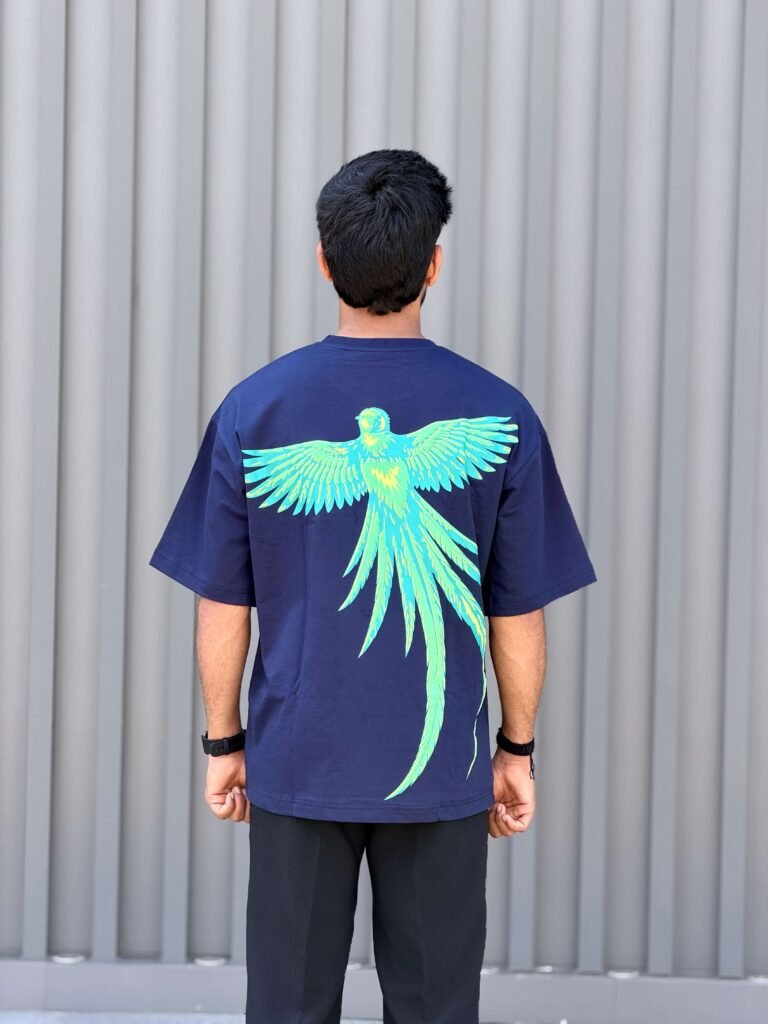
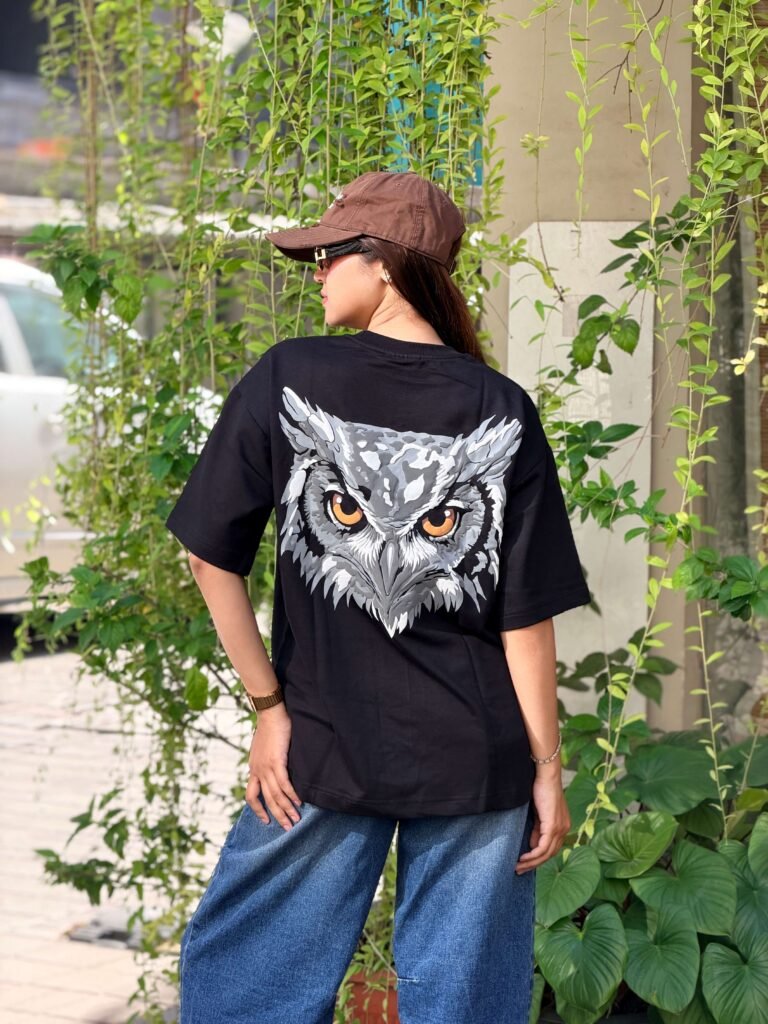
Our Premium T-shirts sit in the heavier range specifically because the cuts are designed to hold structure.
What GSM does not tell you
A heavy t-shirt made from poor yarn will still pill, still fade and still feel rough. GSM measures quantity, not quality. Which brings us to the next number.
2. Yarn — combed vs carded
Raw cotton contains fibres of varying lengths. What a mill does with them determines almost everything about how the finished fabric feels.
Carded cotton is cleaned and aligned, but the short fibres stay in. Those short fibres have loose ends that work their way to the surface with wear, which is what causes pilling and that slightly rough hand-feel. Cheaper to produce.
Combed cotton goes through an extra step that removes the short fibres entirely, leaving only the long ones. The result is smoother, stronger, and far less prone to pilling. It costs roughly 15–20% more to produce and is the clearest single indicator that a brand is not cutting corners.
Ring-spun describes how the yarn is twisted — continuously, which produces a finer and softer thread than the faster open-end method. Combed ring-spun cotton is the combination you want to see on a label.
Bio-washed means the finished fabric has been treated with enzymes that remove surface fuzz. It makes the tee softer straight out of the bag and reduces future pilling. It is a finishing process, not a fibre quality, so it improves a good fabric and only disguises a bad one temporarily.
If a product page says “100% cotton” and nothing else, assume carded and open-end. Brands that use combed ring-spun say so, because they paid for it.
3. Knit structure
Single jersey is the standard t-shirt knit — smooth on the face, looped on the back, stretchy and breathable. This is what the vast majority of t-shirts are.
Pique has a textured, slightly waffled surface. Standard for polo shirts. More breathable than single jersey because the texture creates air pockets, and it hides creasing better.
Interlock is a double knit, so both sides look like the face of single jersey. Thicker, more stable, less prone to curling at the hem. Higher GSM at the same thickness.
Slub uses deliberately uneven yarn to create a textured, irregular surface. A style choice rather than a quality marker, though it does hide minor marks well.
For most t-shirts you are choosing between single jersey and interlock, and the practical difference is that interlock holds its shape better and single jersey breathes better.
4. Construction details
The specs cover fabric. Construction covers whether the garment survives.
Neck tape. A strip of fabric stitched along the inside shoulder seam from one shoulder to the other. It carries the load when you pull a tee over your head, which is the single biggest cause of shoulder seam failure. Its absence is the most reliable sign of a cheaply built t-shirt.
Side seams vs tubular. Tubular tees are knitted as a continuous cylinder with no side seams — faster and cheaper to make, but the fabric twists around the body after a few washes. Side-seamed tees are cut and sewn to shape, hold their alignment, and let the brand actually design a fit.
Collar rib. 1×1 ribbing with elastane holds its shape. Plain jersey folded over does not. Stretch the collar gently — if it does not spring back fully, it will be a loose oval within months.
Double-needle hems. Two parallel rows of stitching at the sleeve and bottom hem. Roughly twice as resistant to unravelling as a single row, and visible from the outside if you look.
Stitch density. Count stitches along an inch of hem. More stitches means a stronger, more flexible seam. Under eight per inch is loose.
Reading a product page quickly
If you only have thirty seconds, check these four:
- GSM listed? If a brand does not publish it, there is usually a reason.
- Combed or ring-spun mentioned? If the label just says cotton, assume the cheaper option.
- Neck tape and side seams mentioned? Both are cheap to add and brands that add them say so.
- Actual garment measurements, not just S/M/L? Brands that publish chest and length measurements have designed a fit deliberately.
A t-shirt that passes all four at ₹800 is better value than one that passes none at ₹1,500.
Making a good t-shirt last
Even the best construction fails under bad care.
Wash cold, inside out. Hot water is what breaks down cotton fibres and fades prints. Inside out protects any graphic from abrasion against the drum.
Skip the dryer. Tumble drying is the single fastest way to shrink a tee and warp its collar. Air dry flat or on a wide hanger — thin wire hangers create permanent shoulder bumps.
Do not iron over prints. Turn the tee inside out and iron the reverse, or use a cloth between the iron and the print.
Give it a rest day. Cotton fibres recover their shape between wears. Wearing the same tee two days running accelerates stretching at the elbows and neck.
Done consistently, this is the difference between replacing your favourite tee every season and still wearing it in three years.
Browse our Premium T-shirts for the full specs on each, or see the complete collection.