Necklines & Sleeve Styles
 admin
7 min read
Two t-shirts can share a fabric, a colour and a fit and still look nothing alike on you. The difference is almost always the neckline and the sleeve.
These are the parts of the garment that sit closest to the features people actually look at — your face and your arms. Getting them right does more for how a tee looks on you than going up or down a size ever will.
Necklines
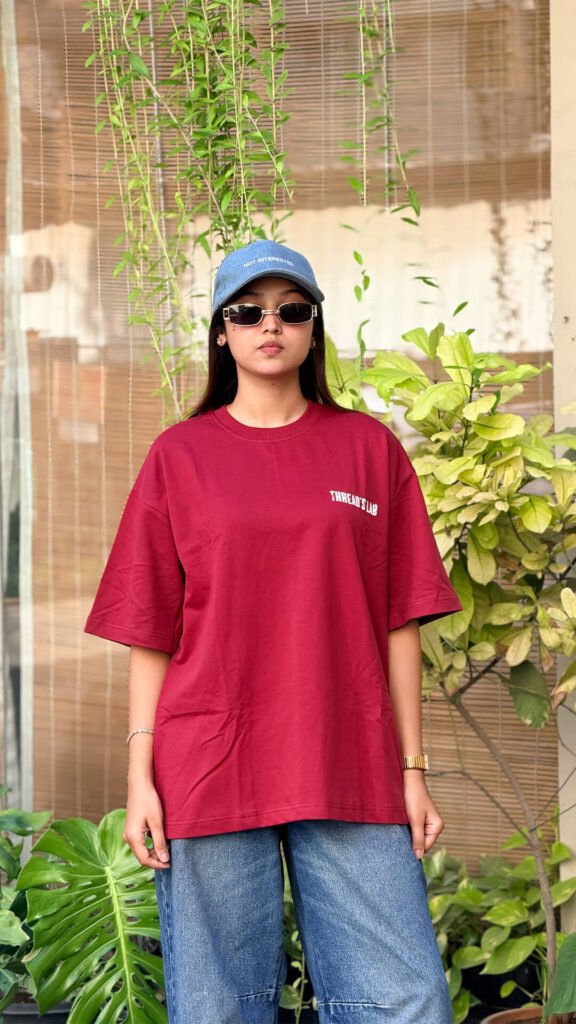
Crew neck
The round, close-fitting collar that most people picture when they think t-shirt. Versatile, easy to layer, and neutral enough to work with almost anything.
What it does: creates a horizontal line across the collarbone. That line visually widens the upper chest and shortens the neck slightly.
Suits: long necks, narrow shoulders, and anyone wanting a broader-looking upper body.
Be careful if: you have a short neck or a fuller face — the horizontal line sits high and can make both look more compressed.
Detail worth checking: rib depth and quality. A 1×1 ribbed collar with a proper stitch holds its round shape through repeated wear. A thin, flat-knit collar goes wavy fast, and there is no fixing it once it does.
V-neck
A collar that dips into a point at the front. Depth varies enormously between brands, from a subtle notch to something well down the chest.
What it does: the opposite of a crew. It creates a vertical line, which lengthens the neck and narrows the appearance of the upper body.
Suits: shorter necks, rounder faces, broader upper bodies.
Be careful if: you are already narrow through the shoulders — a V can make them look narrower still. And keep the depth shallow. A deep V stops being a neckline and starts being a statement.
Henley
A crew neck with a short placket and two or three buttons.
What it does: gives you the crew’s shape with a vertical placket line running down from it, which softens the horizontal effect. Buttoned it reads neat; unbuttoned it reads relaxed.
Suits: almost everyone, and it is the easiest way to make a plain tee look slightly more considered.
Be careful if: the placket is stiff or thick — it can bubble away from the chest. Softer knits sit flatter.
Polo collar
A folded collar with a two or three button placket. Not strictly a t-shirt, but it lives in the same drawer.
What it does: the standing collar adds structure at the neck, which lifts the whole silhouette and reads considerably smarter than a flat neckline.
Suits: smart-casual settings, anyone who wants one garment that works for both office and weekend.
Be careful if: the collar is unstructured — a limp polo collar looks worse than no collar. Check for a fused or ribbed collar construction.
Scoop neck
A wider, deeper round neckline.
What it does: exposes more collarbone and widens the neckline horizontally. More relaxed and less formal than a crew.
Suits: layering, warm weather, and anyone who finds crew necks sit too tight at the throat.
Be careful if: you want to layer it under anything with its own collar — the scoop will show at an awkward angle.
Boat neck
A wide, shallow horizontal neckline running close to shoulder to shoulder.
What it does: maximises horizontal width across the collarbone, which broadens the shoulder line significantly.
Suits: narrow shoulders, and anyone wanting to balance wider hips.
Be careful if: you already have broad shoulders. This will exaggerate them.
You can see how these sit in practice across our Neckline collection.
Sleeve styles
Set-in short sleeve
The standard. Sleeve is cut separately and joined with a seam at the shoulder edge.
What it does: creates a clean, defined shoulder line. Structured and neat.
Suits: anyone with a shoulder line worth showing. It is also the most versatile for layering because the seam sits where jacket seams expect it.
Where the sleeve should end: mid-bicep for a standard look, just above the elbow for a relaxed one. Below the elbow reads as too big.
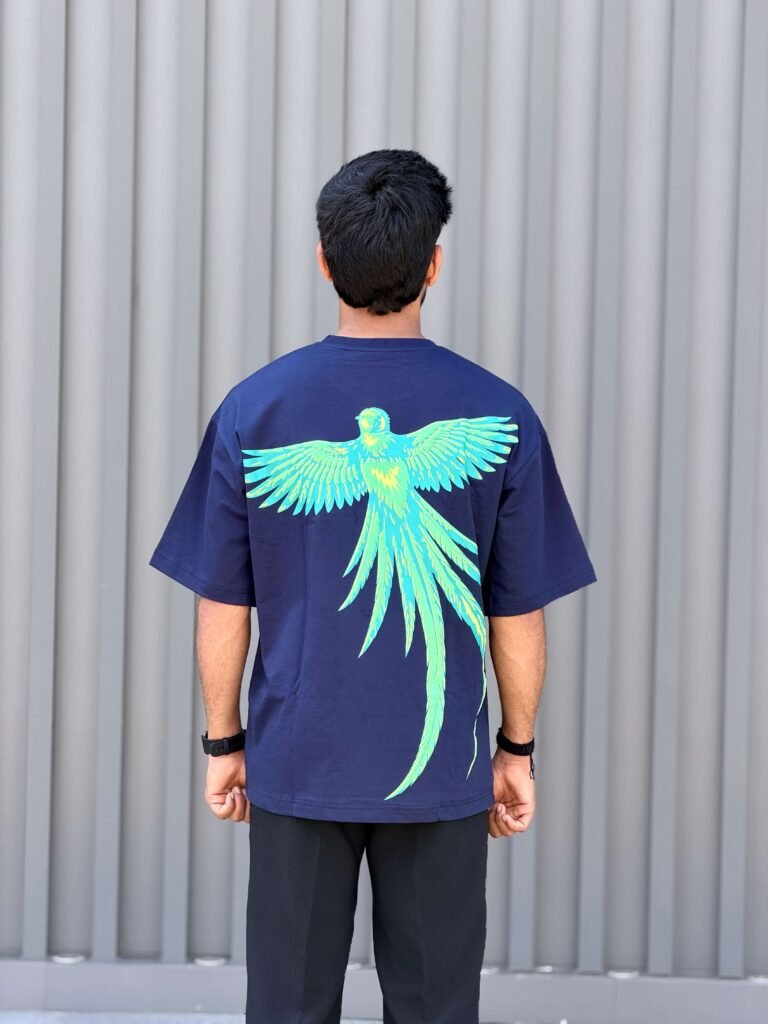
Drop shoulder
The shoulder seam is moved down onto the upper arm, so the sleeve starts partway along it.
What it does: removes the defined shoulder point and replaces it with a soft, sloped line. This is the detail that makes oversized tees look oversized rather than just large.
Suits: streetwear styling and relaxed silhouettes generally.
Be careful if: you want structure. A drop shoulder under a fitted jacket creates bunching where the two seams disagree.
Raglan
The sleeve runs in one piece from the underarm all the way to the collar, creating a diagonal seam across the chest.
What it does: gives more range of movement than any other sleeve, which is why it started on sportswear. The diagonal seam also draws the eye inward and upward, which narrows the shoulder line visually.
Suits: broader shoulders, and anyone who wants genuine freedom of movement.
Be careful if: you are narrow through the shoulders — raglan will make them look narrower.
Cap sleeve
A very short sleeve covering just the shoulder cap.
What it does: exposes most of the arm while keeping the shoulder covered.
Suits: hot weather, leaner arms.
Be careful if: the sleeve opening is tight. Cap sleeves that grip the bicep are uncomfortable and unflattering at once.
Long sleeve and three-quarter
Full length and mid-forearm respectively.
What it does: long sleeves lengthen the arm line and layer well under short sleeves. Three-quarter breaks the arm at the forearm, which reads more casual.
Be careful if: the cuff is loose. A long sleeve with a stretched-out cuff slides down the hand constantly. Ribbed cuffs hold; plain hemmed ones do not.
Our Sleeve Style collection covers the main constructions.
Pairing neckline with sleeve
They interact, so it is worth thinking about them together rather than separately.
Broad shoulders, want to balance: V-neck with a raglan sleeve. Both pull the eye inward.
Narrow shoulders, want width: crew or boat neck with a set-in sleeve. Both emphasise the horizontal shoulder line.
Short neck: V-neck or henley with any sleeve. The vertical line at the neck does the work.
Relaxed streetwear look: crew neck with a drop shoulder. This is the standard oversized combination and it works because the soft shoulder and the round collar agree with each other.
Smart casual: polo or henley with a set-in sleeve. Structure at both points.
Frequently asked questions
Which neckline suits a round face? A V-neck or a henley. Both create a vertical line at the neck that lengthens the face visually, where a crew neck’s horizontal collar line does the opposite.
Is a drop shoulder the same as an oversized t-shirt? Not quite. Drop shoulder describes the sleeve construction; oversized describes the whole cut. Almost every oversized tee uses a drop shoulder, but you can find drop-shoulder sleeves on relaxed-fit tees too.
Why does my t-shirt collar go loose and wavy? Almost always because the collar is flat-knit rather than ribbed, or because the tee is being pulled over the head by the collar and there is no neck tape to carry the load. Neither is repairable once it happens.
Are raglan sleeves only for sportswear? No. Raglan started in sportswear because of the movement range, but the diagonal seam works well on everyday tees too, particularly if you have broad shoulders and want to soften the line.
What sleeve length should a short sleeve be? Mid-bicep for a standard look, just above the elbow for a relaxed one. If the sleeve reaches the elbow, the tee is larger than intended.
The detail most people skip
Collar construction outlasts everything else in deciding whether a tee stays wearable. A tee can hold its colour and its shape through years of washing and still end up unwearable because the neckline has stretched into a loose oval.
What to look for: ribbed knit rather than flat fabric, a visible taped seam across the back of the neck, and a collar that springs back when you stretch it gently. Those three details cost the manufacturer very little and are the clearest signal of whether a t-shirt was built to last.
Browse the full range to compare constructions across cuts.